Installation of heating systems
Our company installs heating systems for various types of buildings: from apartments and private houses to commercial and industrial buildings. For each customer, we develop a heating system that is suitable for a specific object. First of all, we focus on energy efficiency, cost-effectiveness and quality.
To ensure comfortable indoor air parameters, long-term operation of the entire system and create coziness, it is necessary to prepare a project in advance. And only then is it better to proceed directly to the installation. The work may include the complex installation of an independent heating system and the connection of individual elements to an existing heat source.
Realized projects
-
Residential complexes, Apartments
HVAC system of the Lion Hills residential complex

-
Warehouses, Office centers
HVAC system of the office and warehouse complex of Suzirya LLC

-
Apartments
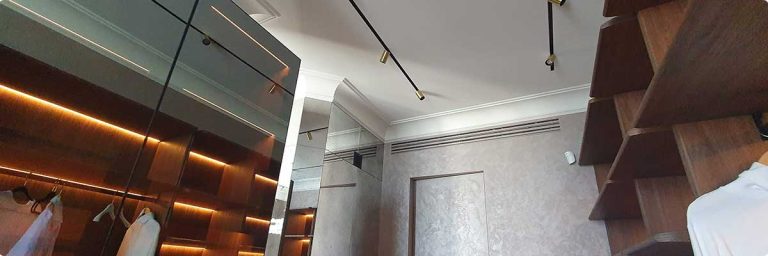
HVAC system of the penthouse
-
Restaurants and cafes
HVAC system of the Tbilisuri restaurant

-
Restaurants and cafes, Shopping centers and stores
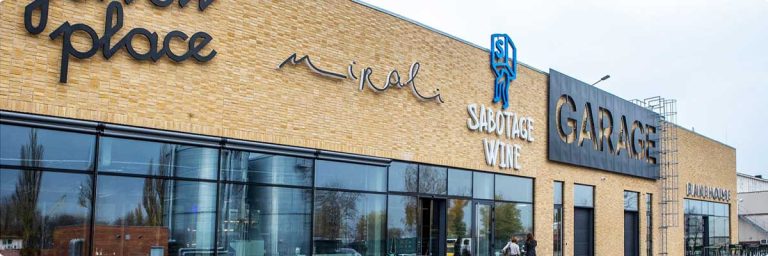
HVAC system for the Garage gastro-hub by Goodwine
-
Office centers, Restaurants and cafes, Coworking spaces
HVAC system of coworking space “Generator”

-
Private houses
HVAC system for a 600 m² private house

-
Gas stations
HVAC system of the KLO filling stations network

-
Restaurants and cafes
HVAC system of the Belkin restaurant

-
Warehouses, Office centers
HVAC system of the office and warehouse complex of LLC “STS-Co”


Our clients





















Stages of installation
The stages of installation of different heating systems are very different from each other. Each has its own specifics and requirements. But they can all be divided into categories:
- heat source (boiler or heat pump)
- piping systems for coolant supply
- control valves
- control valves
- heating devices (radiators, convectors, fan coils, heat curtains) or underfloor heating
There are several types of heat sources, which we will discuss below. Almost all of them require a separate technical room – a boiler room.
Installation of an air-to-water heat pump
The heat pump system is used in cottages, apartments, and small public facilities.
The most difficult process is the installation of the boiler room. It includes the installation of a heat pump, the connection of storage tanks, distribution combs, pumps, and shut-off valves.
The heat pump consists of two units: an outdoor unit and an indoor unit, which are connected by freon piping. From the indoor unit, pipelines are connected to the storage tanks, which supply treated water (hot or cold).
The following can be connected to the heat pump:
- fan coils
- low-temperature radiators and convectors
- warm water floor heating
- a tank for heating hot water
The versatility of a heat pump is that it provides the building with cold in the summer. Some systems have the option of heat recovery in the summer. How does this happen in conventional systems? Fan coils cool the room, but at the same time they take away heat, and the outdoor unit throws it outside. The latest technologies allow this same heat to be reused to heat water for domestic needs. In this case, the consumer receives free hot water.
Installation of a gas, solid fuel or electric boiler
Boilers or their cascades are widely used in various types of buildings: from small cottages to industrial buildings. In the latter case, a separate project of a bulky and expensive boiler room is required.
A boiler can act as both a primary and a backup source of heat. Depending on its type, there is a need to provide a fuel supply. For solid fuel boilers, a separate place is left for pellets or firewood. For a gas boiler, you will additionally need to bring gas, and for an electric boiler, you will need to prepare the necessary capacity in advance. In addition, a chimney is provided for the boiler.
The piping assembly in such a boiler house consists of many elements (cranes, valves, regulators, buffer tanks, combs, circulation pumps, safety group, thermometers, etc.), sometimes their number can reach hundreds.
Heating devices connected to the boiler system include:
- radiators
- convectors
- thermal curtains
- underfloor heating
Installation of a VRF system
A VRF system consists of an outdoor or cascade of outdoor units and indoor air conditioners. It is well suited for large facilities. However, there are also special multi-systems for small commercial buildings.
A VRF system has a long payback period compared to a water boiler, and the cost of its installation is the same, sometimes even lower. In addition, it not only heats the room, but also cools it. In the case of boilers, it is necessary to install an air conditioning system or a chiller-fan coil system separately, which significantly increases the total cost of work. Another advantage of the VRF system is that it does not require a separate technical room. Outdoor units are installed outside (on the roof or walls), and indoor units are installed directly in the work areas.
Installation of shut-off and control valves
Shut-off and control valves are all the cranes, valves, sensors, and regulators used to tie in boiler rooms, mains, and heating devices.
Installation of pipelines
Depending on the type of pipes, their installation also differs. Pipelines can be polypropylene, metal-plastic, steel, PVC (polyvinyl chloride), copper, and stainless steel. Each has its own method of connection and different temperature expansion.
Installation of heating devices
There is a wide range of heating appliances to choose from. The complexity and cost of installation work of one equipment can vary greatly from another. The cost is also affected by the design of the equipment.
- Radiators and convectors (water heating). They are installed under a window, in a niche or in the floor.
- Fan coil units (water heating) and air conditioners (freon). The choice of installation location is much wider: on the ceiling (hidden or open), on the wall, under the window.
- Underfloor heating (water or electric), more often used in bathrooms and toilets. Sometimes a warm wall is installed.
Unlike radiators and convectors, fan coils and underfloor heating can replace the cooling system in summer.
Installation of thermal curtains
A thermal curtain is used to block cold air entering a room through doors. It is most often installed in supermarkets and shops, restaurants, banks and other public facilities.
According to the power source, electric and water curtains are distinguished, and according to the installation method, horizontal and vertical. If necessary, several curtains are installed in a row. Installing a water curtain is a little more complicated and expensive than an electric one, since it requires connecting pipelines with hot water supply.
Installation of fan heaters and destratifiers
Fan heaters and de-stratifiers are installed mainly in warehouses and industrial premises, especially where the ceiling height exceeds 4 m. Fan heaters can be electric or water.
Heating installation requires appropriate knowledge and skills, so only qualified specialists work for us.
After completion of all work, the Customer is provided with a list of documents:
- Executive documentation, which includes existing schemes and system planning with changes already taken into account during installation
- system passport
- equipment operating instructions
- certificates of completion
- warranty for the entire system
- certificates and licenses for equipment
The cost of installing a heating system
The cost of installing a heating system depends on the complexity and scope of work, the type of system, the power of the equipment, and the amount of materials used. The price is also influenced by the time of day the team is installing, whether there are any high-altitude works, and many other details.
Answers to frequently asked questions